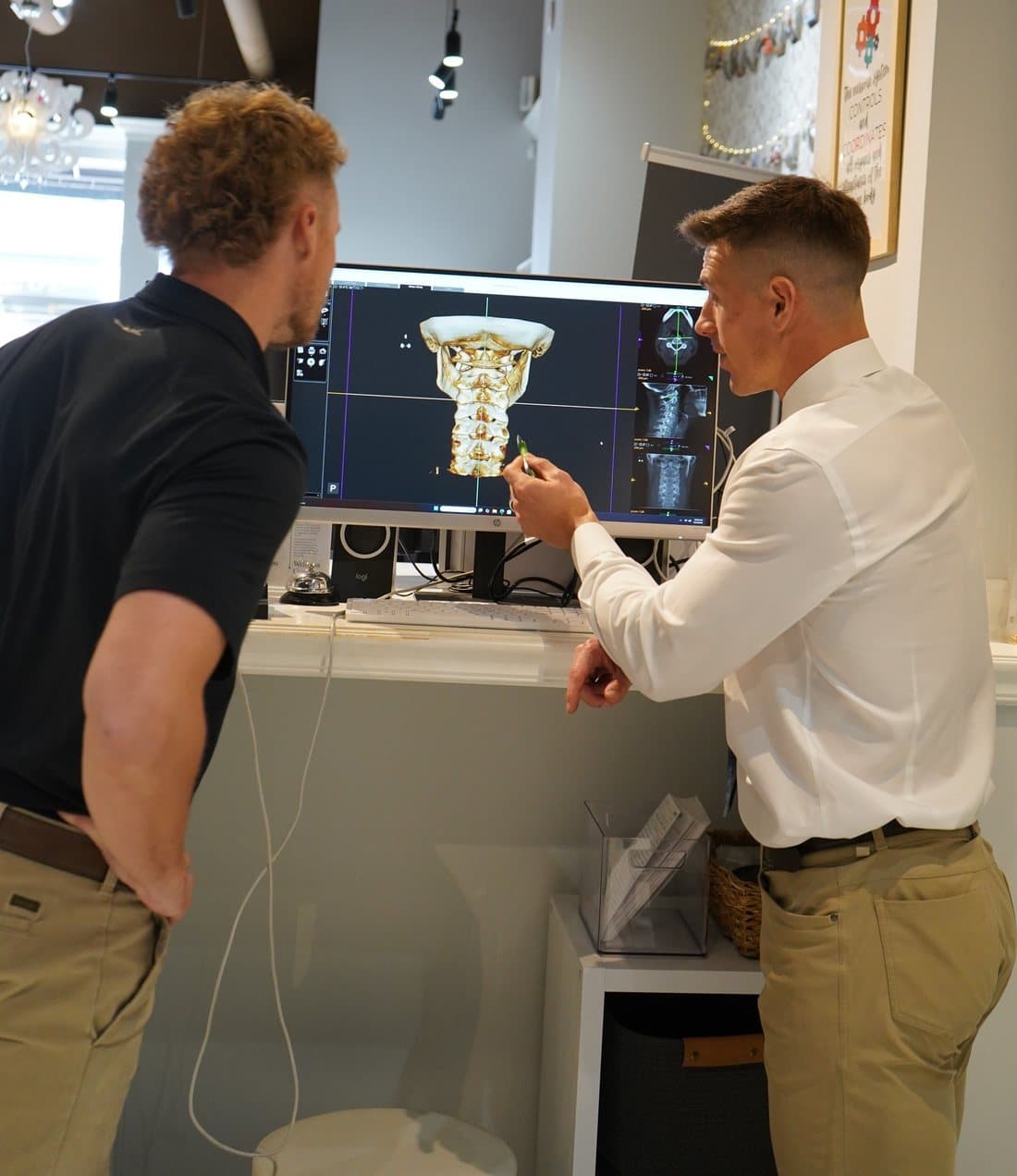
The Knee Chest Upper Cervical technique is a gentle, hands-on chiropractic method that focuses on the atlas (C1) and axis (C2), the top two vertebrae just beneath the skull. It uses 3D imaging and thermography to guide a precise correction, with no forceful twisting or cracking.
These two small bones sit close to the brainstem, which helps the brain and body communicate. When they shift out of place, that communication can be affected. This care aims to restore alignment so the nervous system can work as it should. At Limitless Chiropractic, Dr. Tim Hartman DC leads this approach for patients across Ballantyne and South Charlotte.

What is the Knee Chest technique?
The technique takes its name from the way you are positioned during care. You kneel on a padded table with your chest resting forward, which gives the doctor clear access to the upper cervical spine.
It focuses on the atlas and axis, the two vertebrae that protect the brainstem. Because these bones sit near the structures that carry signals between the brain and body, even a small misalignment can influence how you feel. The goal is to remove that interference with a specific, gentle correction rather than to chase individual symptoms.
How does a Knee Chest visit work?
Care follows a clear, measured process so each correction is based on your anatomy, not guesswork. Nothing is rushed, and the adjustment itself is gentle.
- Consultation and history to understand your symptoms, past injuries, and health background.
- Precise 3D imaging, such as X-rays or a Cone Beam CT scan, to see any misalignment from multiple angles.
- Thermography, a scan that measures small temperature differences along the spine to check for nervous system interference.
- A gentle, hand-delivered correction based on your imaging, with no instruments and no twisting.
- A short rest period of about 15 to 20 minutes, followed by a second scan to confirm the correction held.
What makes this technique different?
Several details set the Knee Chest approach apart from other upper cervical methods. It is entirely hands-on, so the correction depends on the doctor's training and feel rather than tools or drop pieces.
It also addresses both the atlas and the axis, while some methods focus on the atlas alone. Because it needs no specialized equipment, it can be practiced in a wide range of settings. It is considered one of the more demanding upper cervical methods to master, which is part of why certified practitioners are less common.
What may this care help with?
Rather than treating symptoms one by one, the focus is on relieving pressure near the brainstem so the body can regulate itself more easily. Patients have reported changes in a range of concerns, though results vary from person to person.
Reported areas include headaches and migraines, vertigo and dizziness, and neck and back discomfort. Some published case reports also describe changes in other conditions, but individual outcomes differ, and this care is not a cure. A consultation is the best way to understand whether it may fit your situation.
Keep reading
Have a question about your own care? Contact our Ballantyne office or call (704) 765-0454.